
.svg)
.svg)
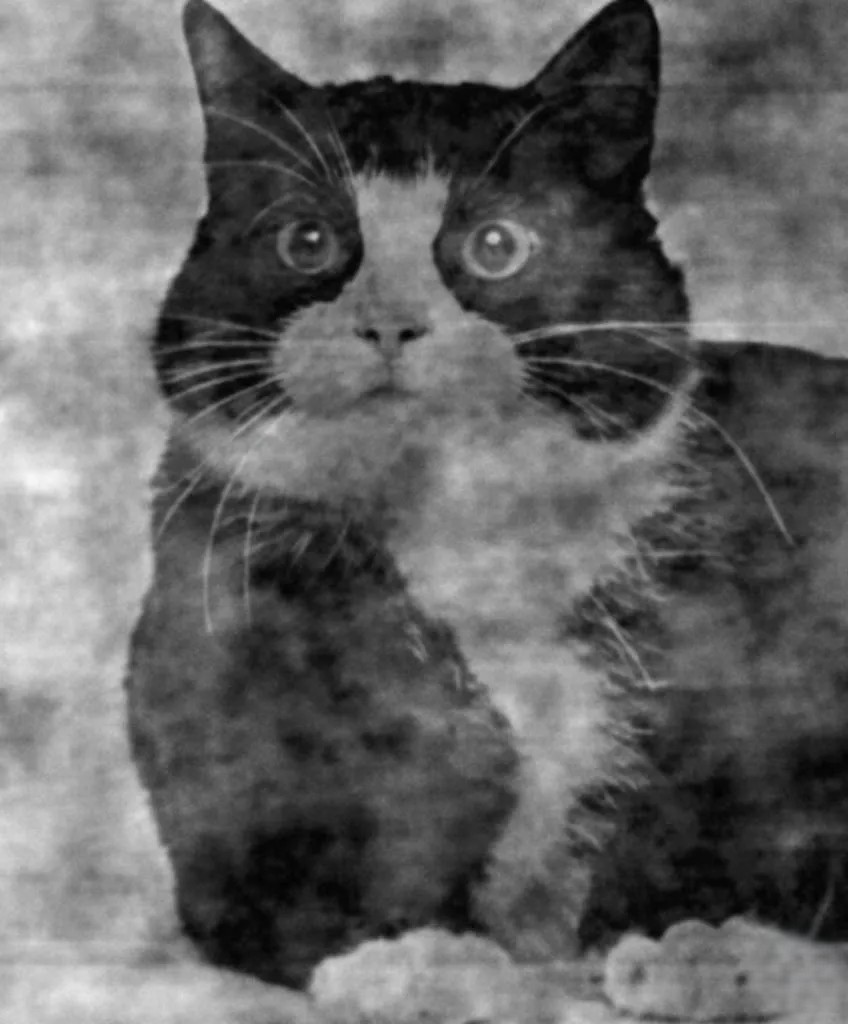

Suppose we have a complex electric field representing an image of a cat, and we ask you, what's more important, the phase of the field or the amplitude? What would you answer? At first glance, the amplitude seems obviously more important, after all, a camera measures intensity, and the phase is lost, the resulting image represents “how much amplitude there is in each pixel”!
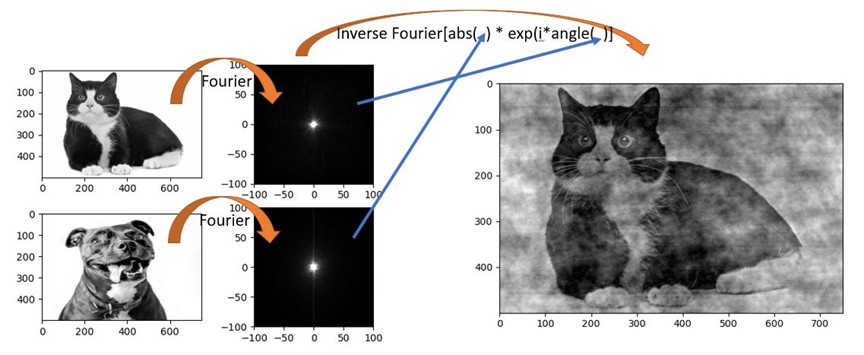
Let’s perform the following numerical experiment. We take two real images, one of a cat and one of a dog (see left in the illustration), and compute the Fourier transform of each. Now we “combine” the results, we take the amplitude from the dog, and the phase from the cat. This gives us a complex image in the Fourier plane, with phases related to the cat and amplitudes related to the dog.
Next, we return to the original plane using an inverse Fourier transform, and observe the resulting image. The answer is surprising, despite the amplitude coming from the dog, the reconstructed image will be clear and much more similar to the cat!
This experiment demonstrates a key principle, although the camera “misses” the phases, when working in the far field, or after propagation through a lens, control over the phase is the critical component. For this very reason, an SLM that controls phase alone is a powerful tool for shaping light. In the next post, we’ll demonstrate how smart phase control can be used to generate an image of our choice.



.png)
.png)


.jpeg)