
.svg)
.svg)
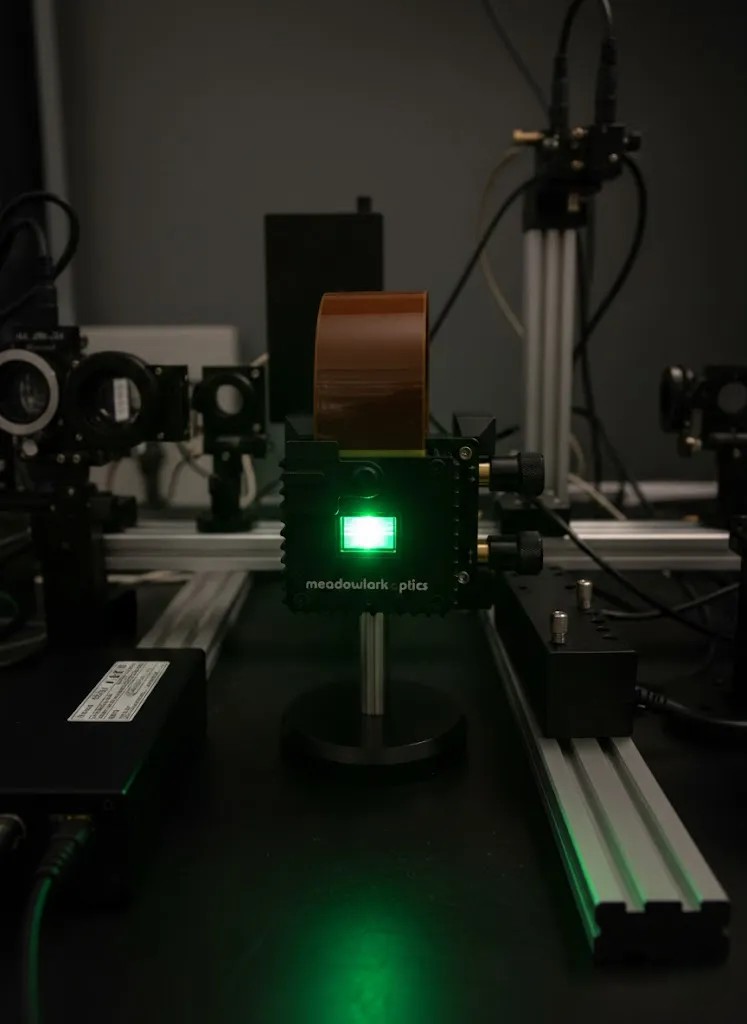

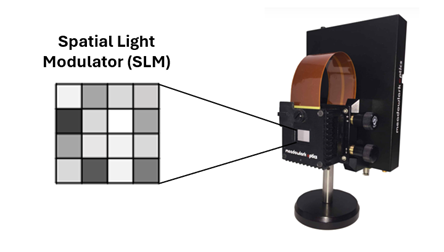
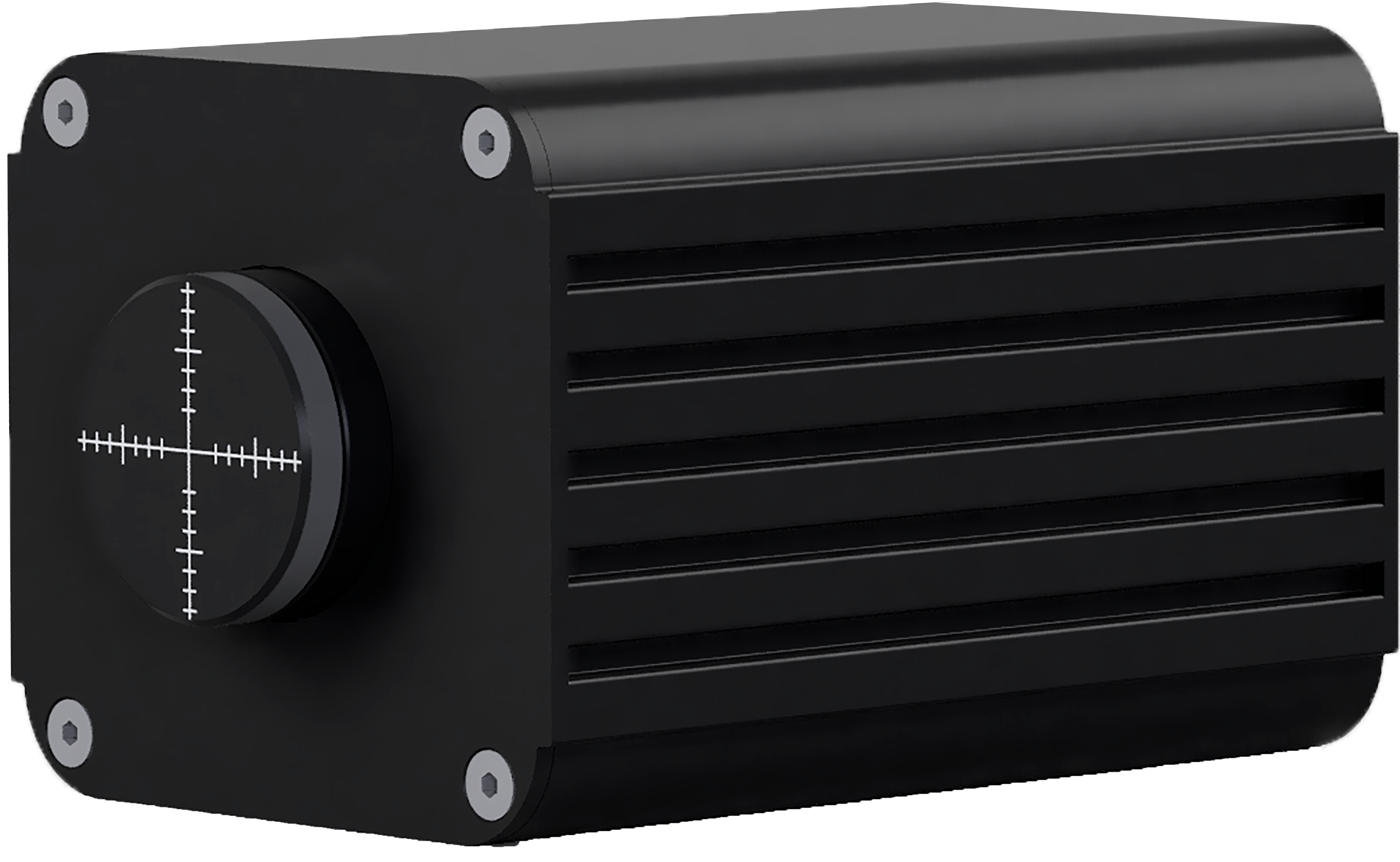
Meet the Spatial Light Modulator, or SLM for short, a simple-looking device packed with potential. At first glance, an SLM resembles a standard pixelated screen. In practice, each pixel is a small “window” that allows control over the phase of the light passing through it, using an applied electric voltage. With this level of control, we can shape the wavefront of light and precisely manipulate its spatial structure.
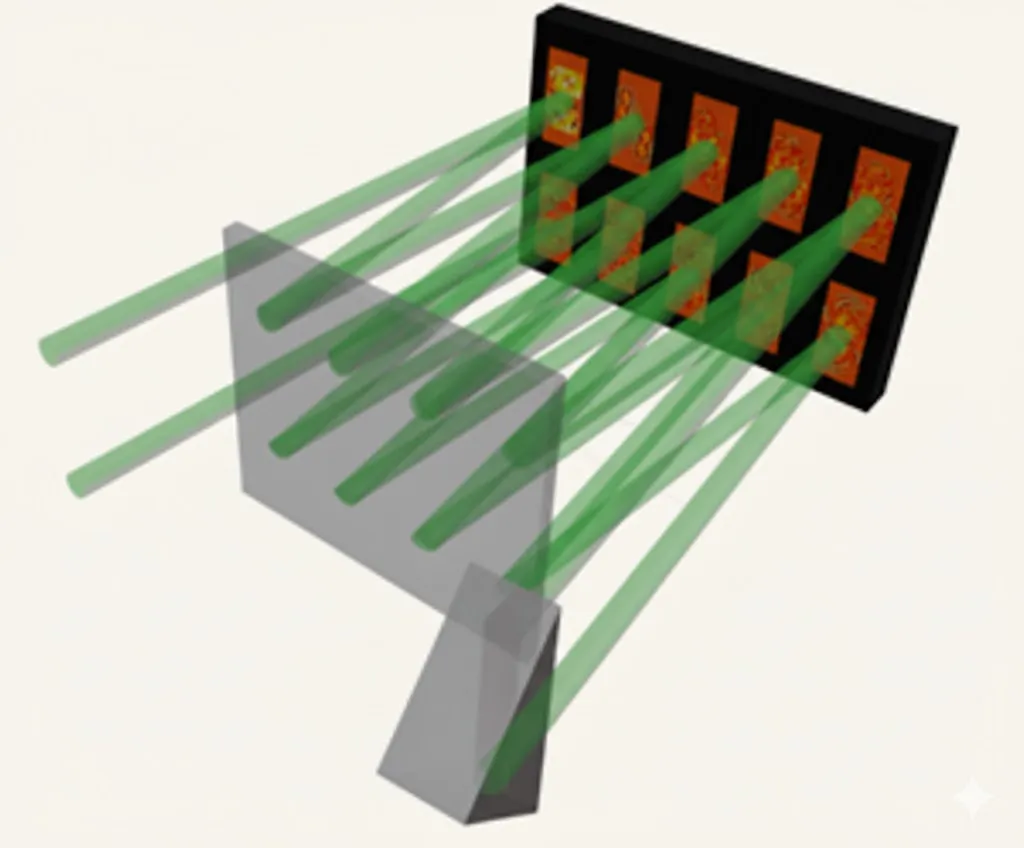
But why would we want to control the spatial shape of light? Imagine trying to transmit a laser beam through a turbulent atmosphere that causes the light to scatter. Whether you are attempting to transmit information for optical communication, or trying to intercept a UAV with a laser system, atmospheric scattering can significantly disrupt performance. By using an SLM and advanced wavefront shaping techniques, we can compensate for distortions and reconstruct a focused beam, even under challenging conditions.
The use of an SLM is not limited to air. It also enables medical imaging through complex biological tissues, which similarly scatter light. With an SLM, it is possible to obtain sharp and accurate images deep within tissue, a capability that is critical for biological and medical research. In addition, SLMs have many other applications, precise astronomical observations in astrophysics, generating unique light patterns for cold atom experiments, creating holograms and advanced display technologies, and more.
And this is only the tip of the iceberg. In the next articles in the series, we will explain how the SLM works and present examples of smart algorithms that enable excellent light control. In following articles in this series we'll also explain about the physics behind the SLM!




.png)
.png)



.jpeg)