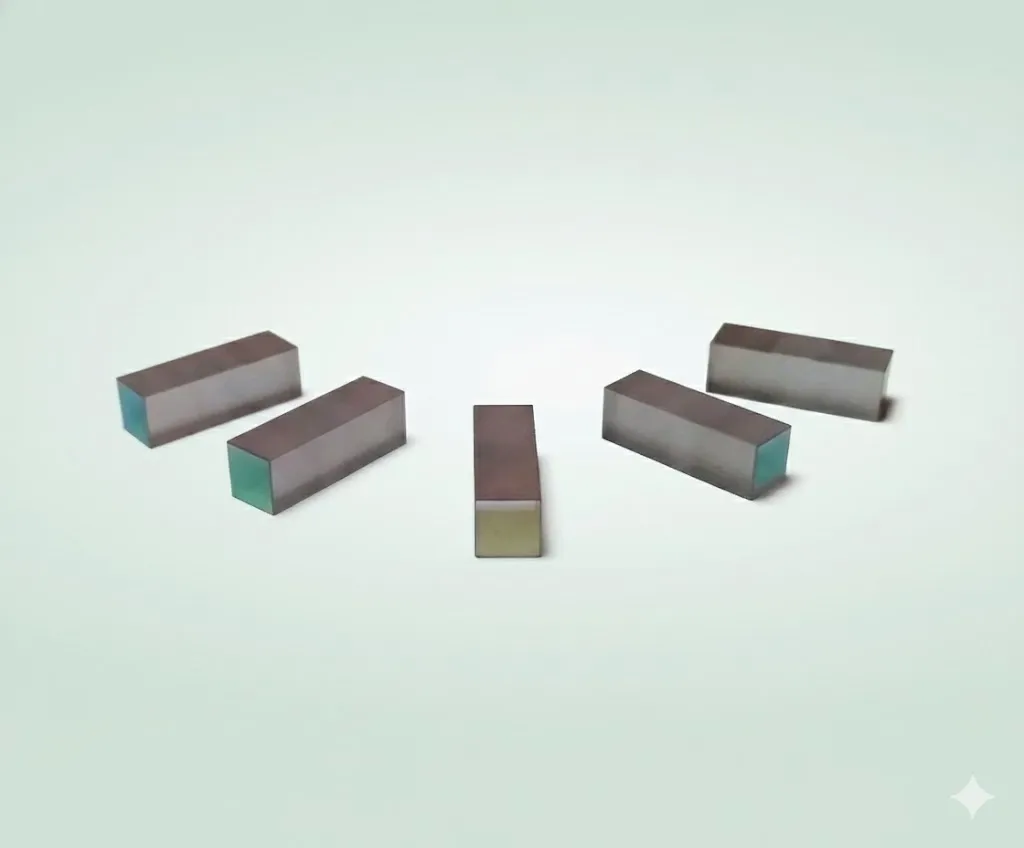
Fiber Recoating

AUTOCOATER 2

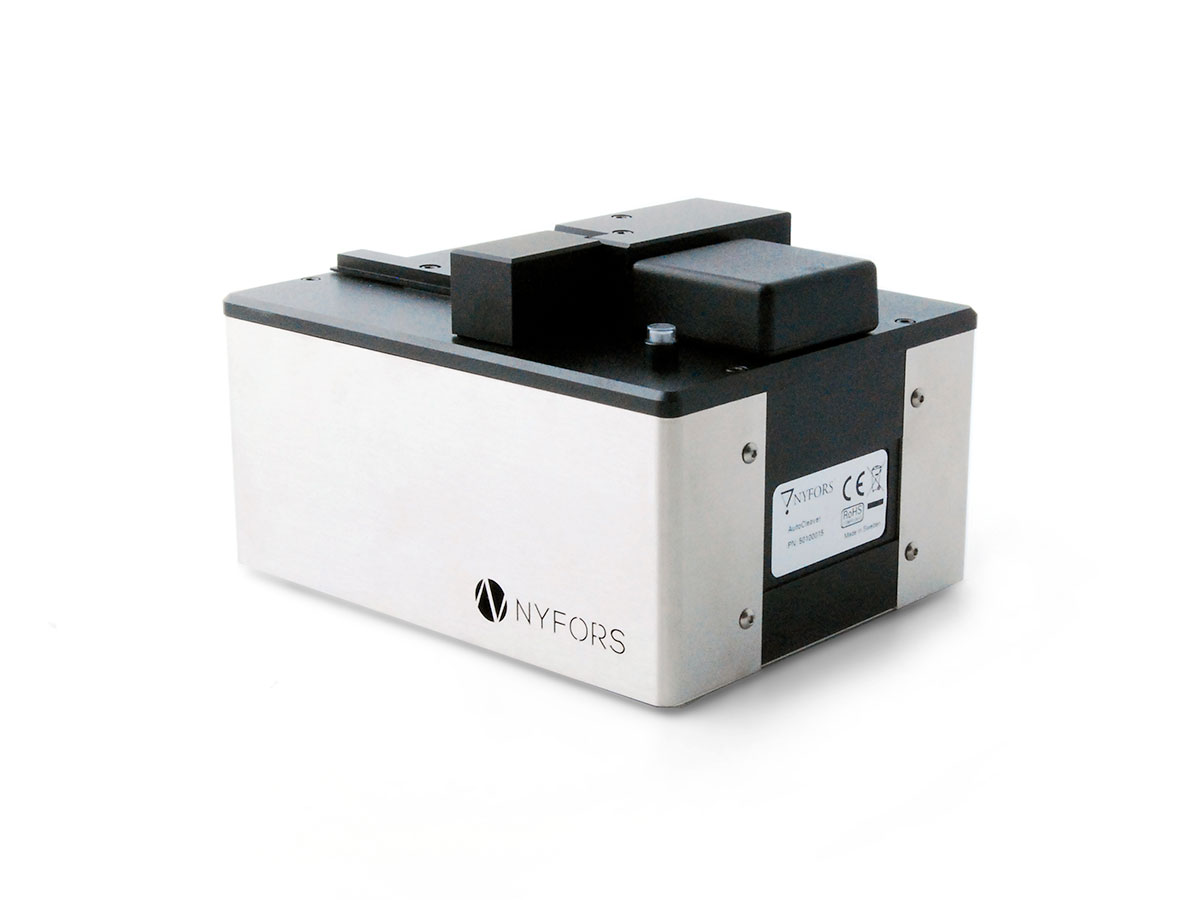
Fully automatic fiber recoating system for high-strength applications, restoring protective acrylate coatings on spliced optical fibers with operator-skill-independent operation and short cycle times.
15 s
Typical cycle time
UV
LED curing source

The AUTOCOATER 2 is a fully automatic fiber recoating system designed for high-strength splicing applications, restoring the protective acrylate coating on stripped and spliced optical fibers. Recoating material is automatically injected into exchangeable silicone moulds, available in sizes covering coating diameters from 165 to 900 μm, and curable in as little as 3 seconds using a highly efficient UV LED light source at 380-385 nm - enabling fast processing of both standard high-index and specialized low-index compounds used in high-power applications.

Designed for production environments, the system achieves a typical cycle time of 15 seconds with fully operator-skill-independent operation. Recoating material is supplied via a standard 1 oz. Nalgene bottle, and the entire injection system - pump, supply lines, and needle - can be swapped as a single unit for rapid reconfiguration between different fiber types or recoating materials. An integrated prooftesting module supports linear tensile testing up to 20 N and mandrel proof testing up to 100 N, covering a broad range of strength requirements. System parameters are accessible through a built-in LCD touchscreen, USB port, or Ethernet interface - with no compressed air or vacuum required.

In short, the AUTOCOATER 2 delivers automatic recoating, flexible mould exchange, and inline prooftesting in a compact 4.5 kg benchtop unit - making it the ideal production-grade solution for high-throughput recoating across a wide range of fiber dimensions and coating specifications.

Download Datasheet

not sure what fits?

Let us help you

We love to solve this puzzle and find the right fit.
In This Series
Green Architecture
Evermind™ template is crafted like sustainable structures — clean, scalable, and built to last.
Precision Engineering
Every layout and component is tuned with variables and pixel-perfect details, so your brand stands on solid ground.
Dynamic Interactions
From nature-inspired transitions to fluid page structures, Evermind™ feels alive yet quietly sophisticated.
Green Architecture
Evermind™ template is crafted like sustainable structures — clean, scalable, and built to last.
Precision Engineering
Every layout and component is tuned with variables and pixel-perfect details, so your brand stands on solid ground.
Dynamic Interactions
From nature-inspired transitions to fluid page structures, Evermind™ feels alive yet quietly sophisticated.

Technical Specifications

  • Curing time: Programmable, 3 s typical
  • Cycle time: 15 s typical
  • Light source: UV LED
  • Wavelength: 380-385 nm
  • Injection: Automatic from 1 oz bottle
  • Mould material: Silicone
  • Mould mounting: Exchangeable
  • Mould length: 34 mm & 55 mm
  • Tensile test: 0-20 N (linear) / 0-100 N (mandrels)
  • Recoating diameter: 165, 250, 300, 400, 550, 730 & 900 μm*
  • PC connection: Ethernet and USB flash drive
  • Power supply: External 12 V DC, 60 W
  • Compressed air: Not needed
  • Dimensions: 270 mm (W) x 210 mm (D) x 100 mm (H)
  • Weight: 4.5 kg
  • NYFORS part number: 50100103

* Custom moulds available for other diameters.

Technical Specifications

  • Curing time: Programmable, 3 s typical
  • Cycle time: 15 s typical
  • Light source: UV LED
  • Wavelength: 380-385 nm
  • Injection: Automatic from 1 oz bottle
  • Mould material: Silicone
  • Mould mounting: Exchangeable
  • Mould length: 34 mm & 55 mm
  • Tensile test: 0-20 N (linear) / 0-100 N (mandrels)
  • Recoating diameter: 165, 250, 300, 400, 550, 730 & 900 μm*
  • PC connection: Ethernet and USB flash drive
  • Power supply: External 12 V DC, 60 W
  • Compressed air: Not needed
  • Dimensions: 270 mm (W) x 210 mm (D) x 100 mm (H)
  • Weight: 4.5 kg
  • NYFORS part number: 50100103

* Custom moulds available for other diameters.

Technical Specifications

  • Curing time: Programmable, 3 s typical
  • Cycle time: 15 s typical
  • Light source: UV LED
  • Wavelength: 380-385 nm
  • Injection: Automatic from 1 oz bottle
  • Mould material: Silicone
  • Mould mounting: Exchangeable
  • Mould length: 34 mm & 55 mm
  • Tensile test: 0-20 N (linear) / 0-100 N (mandrels)
  • Recoating diameter: 165, 250, 300, 400, 550, 730 & 900 μm*
  • PC connection: Ethernet and USB flash drive
  • Power supply: External 12 V DC, 60 W
  • Compressed air: Not needed
  • Dimensions: 270 mm (W) x 210 mm (D) x 100 mm (H)
  • Weight: 4.5 kg
  • NYFORS part number: 50100103

* Custom moulds available for other diameters.

Related products
ready to start?
Stuck with a spec sheet that reads like sci-fi? Need a component that probably doesn't exist yet? Let's make it happen. Together.
FAQ

Questions, answered with clarity.

We’ve collected the questions we get all the time, and actually answered them. No mystery, no marketing poetry - just facts. Still have an open question? We're here to help:
Contact Us
World leading fiber processing products
What coating diameters does the AUTOCOATER 2 support?

The AUTOCOATER 2 supports recoating diameters of 165, 250, 300, 400, 550, 730, and 900 μm. Custom moulds are also available for other diameters.

What is the typical cycle time and curing time?

The typical cycle time is 15 seconds. Curing time is programmable, with a typical curing time of 3 seconds, achieved by the highly efficient UV LED light source.

Does the AUTOCOATER 2 support both high-index and low-index recoating materials?

Yes. The UV LED light source at 380-385 nm enables fast processing of both standard high-index recoating materials and specialized low-index compounds used in high-power fiber laser applications.

What tensile and prooftesting capability is built in?

The system includes integrated linear tensile testing from 0 to 20 N and mandrel proof testing from 0 to 100 N, allowing inline strength verification without additional equipment.

Does the AUTOCOATER 2 require compressed air or vacuum?

No. The system requires neither compressed air nor vacuum, simplifying installation and reducing infrastructure requirements in production environments.

How is the recoating material supplied and switched between fiber types?

Recoating material is automatically injected from a 1 oz. Nalgene bottle. The entire injection assembly - including pump, supply lines, and needle - can be removed and exchanged as a single unit, enabling fast switching between different recoating materials or fiber types with no system realignment required.

New Products
Facing a Challenge? Let’s Solve It Together