Photonic Assembly

LED - Photonic Assembly

Custom photonic assembly service covering chip bonding, wire bonding, encapsulation, TO and SMD packaging - supporting multichip modules from 200 nm to 2300 nm for medical, industrial, and security OEM applications.
+-10 µm
Placement accuracy
5 sizes
TO package options

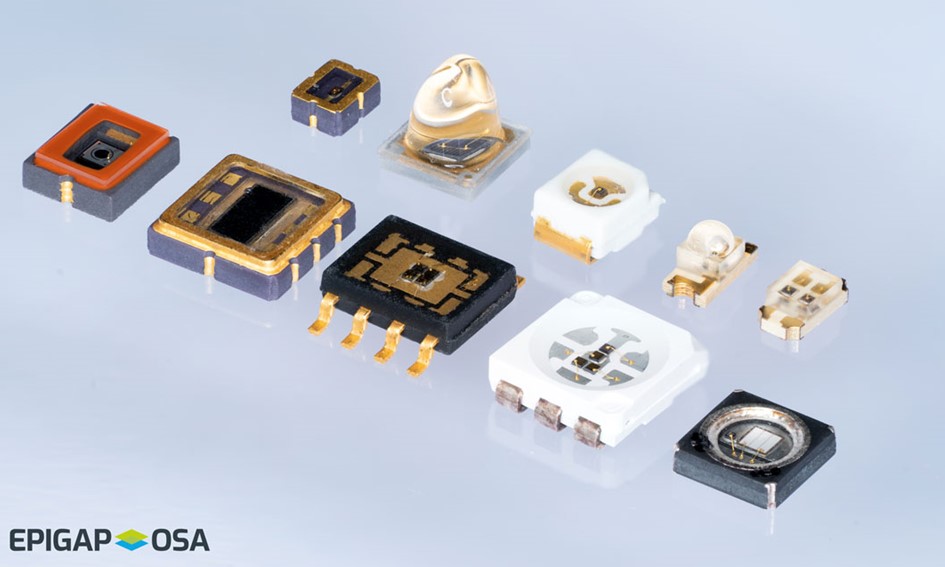
EPIGAP OSA Photonics offers a comprehensive Photonic Assembly service covering the full packaging workflow for optoelectronic components, from individual chip placement to completed hermetically sealed modules. The service supports a wide range of package formats including custom SMD layouts, TO-cans, Chip-on-Board (CoB) assemblies, and multichip modules, with placement accuracy down to +/-10 µm and multichip assemblies integrating 20 or more components per module. All assembly work is performed in-house at the Berlin Kopenick facility under controlled conditions, with complete lot traceability.

The assembly service is structured around five core capabilities: chip bonding and pick-and-place, gold wire bonding, encapsulation, TO packaging, and SMD packaging. Wire bonding uses gold wire from 17 to 30 µm diameter with ball-wedge and wedge-wedge techniques, qualified by pull and shear testing to MIL standards. Encapsulation options span flat, dam-and-fill, glob top, and lensed formats in clear, white, or light-blocking black materials, with phosphor conversion coatings available for white LED or NIR emission applications. Hermetic TO-cans are assembled under nitrogen or trimix atmosphere, with optional thermoelectric cooling (TEC) integration and custom optical caps including AR coatings and bandpass filters.

This service is especially suited to OEM customers in medical technology and biophotonics, industrial sensor and automation, and safety and security segments who need small-to-medium production series with tight spectral and binning specifications, serialized documentation, and complete supply chain management. EPIGAP OSA handles everything from prototype to series production, including burn-in, qualification, tape-and-reel delivery, and failure analysis.


not sure what fits?

Let us help you

We love to solve this puzzle and find the right fit.
In This Series
Green Architecture
Evermind™ template is crafted like sustainable structures — clean, scalable, and built to last.
Precision Engineering
Every layout and component is tuned with variables and pixel-perfect details, so your brand stands on solid ground.
Dynamic Interactions
From nature-inspired transitions to fluid page structures, Evermind™ feels alive yet quietly sophisticated.
Green Architecture
Evermind™ template is crafted like sustainable structures — clean, scalable, and built to last.
Precision Engineering
Every layout and component is tuned with variables and pixel-perfect details, so your brand stands on solid ground.
Dynamic Interactions
From nature-inspired transitions to fluid page structures, Evermind™ feels alive yet quietly sophisticated.

Chip Bonding and Pick and Place

Multichip assembliesUp to 20+ components per module
Placement accuracyDown to +- 10 µm
Bonding modesManual and automatic die attach
SubstratesFR4, flex PCB, IMS (Insulated Metal Substrate), ceramics, TO
Die attach optionsFlip-chip, CoS (Chip on Submount), eutectic soldering
Solder materialsAuSn preforms or Sn-Ag-Cu alloys
Soldering methodVacuum soldering (low and high temperature)
Chip bonding machine at EPIGAP OSA
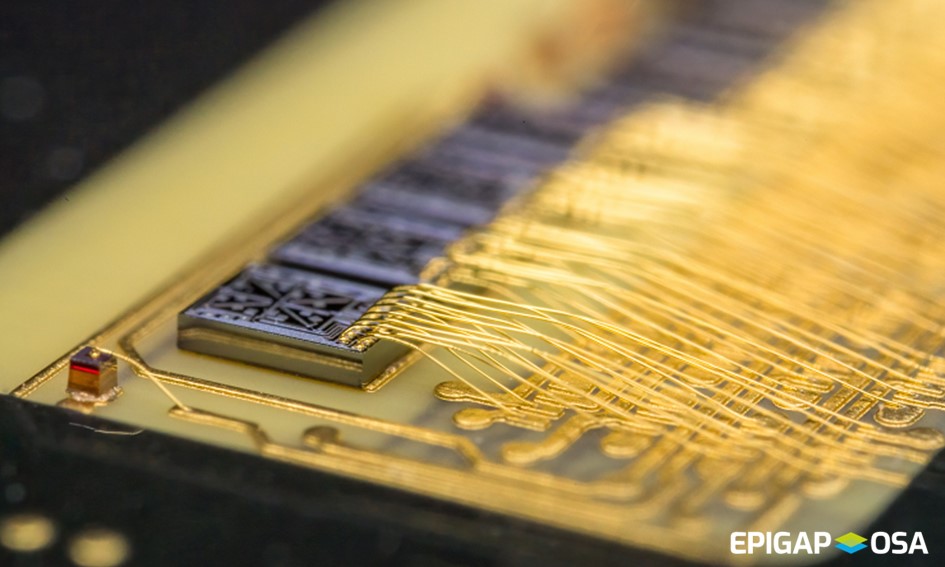
Wirebonded chips EPIGAP OSA

Wire Bonding

Machine typesManual and automatic
Wire diametersGold wire: 17 µm / 25 µm / 30 µm
Bonding modesBall-wedge and wedge-wedge
Bumping techniquesBond Stitch On Ball (BSOB), Safe Bump
Quality testingPull and shear testing per MIL standards
Wirebonding process EPIGAP OSA

Encapsulation

TypesFlat, dam and fill, glob top, lensing
MaterialsClear, white, black (light-blocking)
Conversion materialsPhosphor conversion for White LEDs or NIR emission; custom materials available
Optical optionsAR coatings and bandpass optical filters on glass caps

TO Packaging

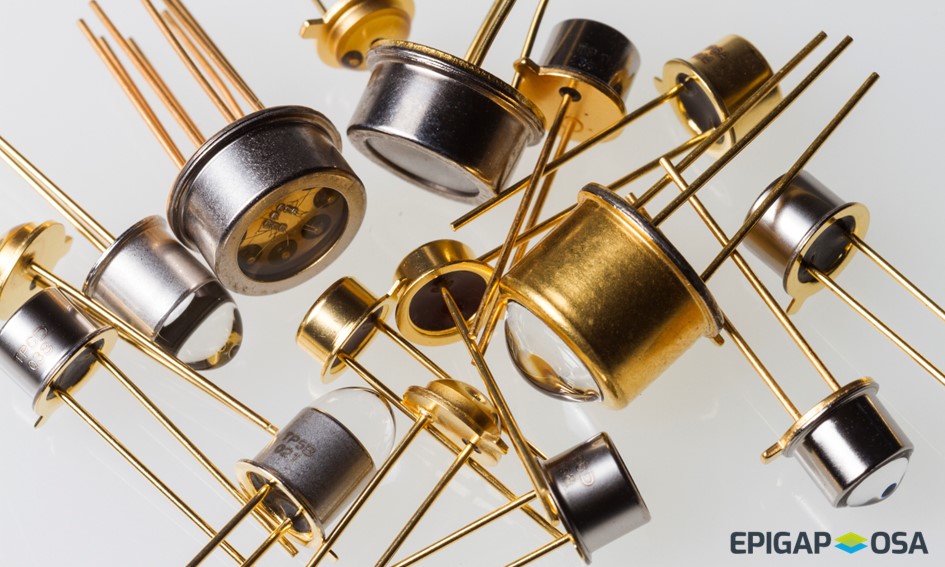
TO sizesTO-46, TO-18, TO-39, TO-5, TO-3
IntegrationMultichip and multi-element in a single TO-can
Custom capsLens, flat window, AR coating, optical filters
AtmosphereAssembly under inert or dry atmosphere (nitrogen, trimix)
CoolingOptional thermoelectric cooling (TEC) integration
THT TO-can LEDs EPIGAP OSA

SMD Packaging

SubstratesFR4, PLCC (Plastic Leaded Chip Carrier), ceramics
Lens optionsEpoxy and glass lens placement
Testing100% automatic testing per CIE 127 norm
Delivery formatTape and reel packaging
SMT lineStencil printing, reflow soldering, 8 mm tape feeder
SMD LED packaging EPIGAP OSA

Chip Bonding and Pick and Place

Multichip assembliesUp to 20+ components per module
Placement accuracyDown to +- 10 µm
Bonding modesManual and automatic die attach
SubstratesFR4, flex PCB, IMS (Insulated Metal Substrate), ceramics, TO
Die attach optionsFlip-chip, CoS (Chip on Submount), eutectic soldering
Solder materialsAuSn preforms or Sn-Ag-Cu alloys
Soldering methodVacuum soldering (low and high temperature)
Chip bonding machine at EPIGAP OSA
Wirebonded chips EPIGAP OSA

Wire Bonding

Machine typesManual and automatic
Wire diametersGold wire: 17 µm / 25 µm / 30 µm
Bonding modesBall-wedge and wedge-wedge
Bumping techniquesBond Stitch On Ball (BSOB), Safe Bump
Quality testingPull and shear testing per MIL standards
Wirebonding process EPIGAP OSA

Encapsulation

TypesFlat, dam and fill, glob top, lensing
MaterialsClear, white, black (light-blocking)
Conversion materialsPhosphor conversion for White LEDs or NIR emission; custom materials available
Optical optionsAR coatings and bandpass optical filters on glass caps

TO Packaging

TO sizesTO-46, TO-18, TO-39, TO-5, TO-3
IntegrationMultichip and multi-element in a single TO-can
Custom capsLens, flat window, AR coating, optical filters
AtmosphereAssembly under inert or dry atmosphere (nitrogen, trimix)
CoolingOptional thermoelectric cooling (TEC) integration
THT TO-can LEDs EPIGAP OSA

SMD Packaging

SubstratesFR4, PLCC (Plastic Leaded Chip Carrier), ceramics
Lens optionsEpoxy and glass lens placement
Testing100% automatic testing per CIE 127 norm
Delivery formatTape and reel packaging
SMT lineStencil printing, reflow soldering, 8 mm tape feeder
SMD LED packaging EPIGAP OSA

Chip Bonding and Pick and Place

Multichip assembliesUp to 20+ components per module
Placement accuracyDown to +- 10 µm
Bonding modesManual and automatic die attach
SubstratesFR4, flex PCB, IMS (Insulated Metal Substrate), ceramics, TO
Die attach optionsFlip-chip, CoS (Chip on Submount), eutectic soldering
Solder materialsAuSn preforms or Sn-Ag-Cu alloys
Soldering methodVacuum soldering (low and high temperature)
Chip bonding machine at EPIGAP OSA
Wirebonded chips EPIGAP OSA

Wire Bonding

Machine typesManual and automatic
Wire diametersGold wire: 17 µm / 25 µm / 30 µm
Bonding modesBall-wedge and wedge-wedge
Bumping techniquesBond Stitch On Ball (BSOB), Safe Bump
Quality testingPull and shear testing per MIL standards
Wirebonding process EPIGAP OSA

Encapsulation

TypesFlat, dam and fill, glob top, lensing
MaterialsClear, white, black (light-blocking)
Conversion materialsPhosphor conversion for White LEDs or NIR emission; custom materials available
Optical optionsAR coatings and bandpass optical filters on glass caps

TO Packaging

TO sizesTO-46, TO-18, TO-39, TO-5, TO-3
IntegrationMultichip and multi-element in a single TO-can
Custom capsLens, flat window, AR coating, optical filters
AtmosphereAssembly under inert or dry atmosphere (nitrogen, trimix)
CoolingOptional thermoelectric cooling (TEC) integration
THT TO-can LEDs EPIGAP OSA

SMD Packaging

SubstratesFR4, PLCC (Plastic Leaded Chip Carrier), ceramics
Lens optionsEpoxy and glass lens placement
Testing100% automatic testing per CIE 127 norm
Delivery formatTape and reel packaging
SMT lineStencil printing, reflow soldering, 8 mm tape feeder
SMD LED packaging EPIGAP OSA
Related products
Related News For this Product
ready to start?
Stuck with a spec sheet that reads like sci-fi? Need a component that probably doesn't exist yet? Let's make it happen. Together.
FAQ

Questions, answered with clarity.

We’ve collected the questions we get all the time, and actually answered them. No mystery, no marketing poetry - just facts. Still have an open question? We're here to help:
Contact Us
LEDs and Photodetectors Made in Germany
What package formats does EPIGAP OSA support for photonic assemblies?

EPIGAP OSA supports a broad range of package formats including SMD (FR4, PLCC, ceramics), TO-cans (TO-46, TO-18, TO-39, TO-5, TO-3), Chip-on-Board (CoB), and fully custom multichip modules. Substrates can be FR4, flex PCB, IMS (Insulated Metal Substrate), ceramics, or TO platforms.

What die attach and chip bonding methods are available?

Available die attach methods include flip-chip, Chip on Submount (CoS), eutectic soldering with AuSn preforms or Sn-Ag-Cu alloys, and vacuum soldering at both low and high temperatures. Placement accuracy is down to +-10 µm, and both manual and automatic die attach are offered.

What wire bonding specifications are supported?

EPIGAP OSA uses gold wire in 17, 25, and 30 µm diameters with ball-wedge and wedge-wedge bonding modes. Advanced bumping techniques including Bond Stitch On Ball (BSOB) and Safe Bump are available. Bond quality is verified by pull and shear testing per MIL standards.

Can TO-cans be assembled with custom optical caps or cooling elements?

Yes. TO-cans (TO-46, TO-18, TO-39, TO-5, TO-3) can be fitted with custom caps including lenses, flat windows, AR-coated windows, and bandpass optical filters. Assembly is performed under inert or dry atmosphere (nitrogen or trimix), and optional thermoelectric cooling (TEC) can be integrated.

What wavelength range and conversion options are available for encapsulation?

Encapsulation materials cover the full spectral range from UV to SWIR. Options include clear, white, and light-blocking black materials. Phosphor conversion materials are available for white LED or custom NIR emission targets. Bandpass and AR coating optical elements can be integrated into glass caps.

What is the typical production volume range and traceability capability?

EPIGAP OSA handles small to medium production series - from prototype batches to several million SMD components per run. Full wafer-level traceability is maintained for all proprietary chips. Serialized documentation with individual measurement reports per module is available on request, along with burn-in, qualification, and supply chain management services.

New Products
Facing a Challenge? Let’s Solve It Together